Transparent Wood Areas
Keep negative space transparent in the master artwork when the natural maple should show through. White underbase decisions belong in prepress.
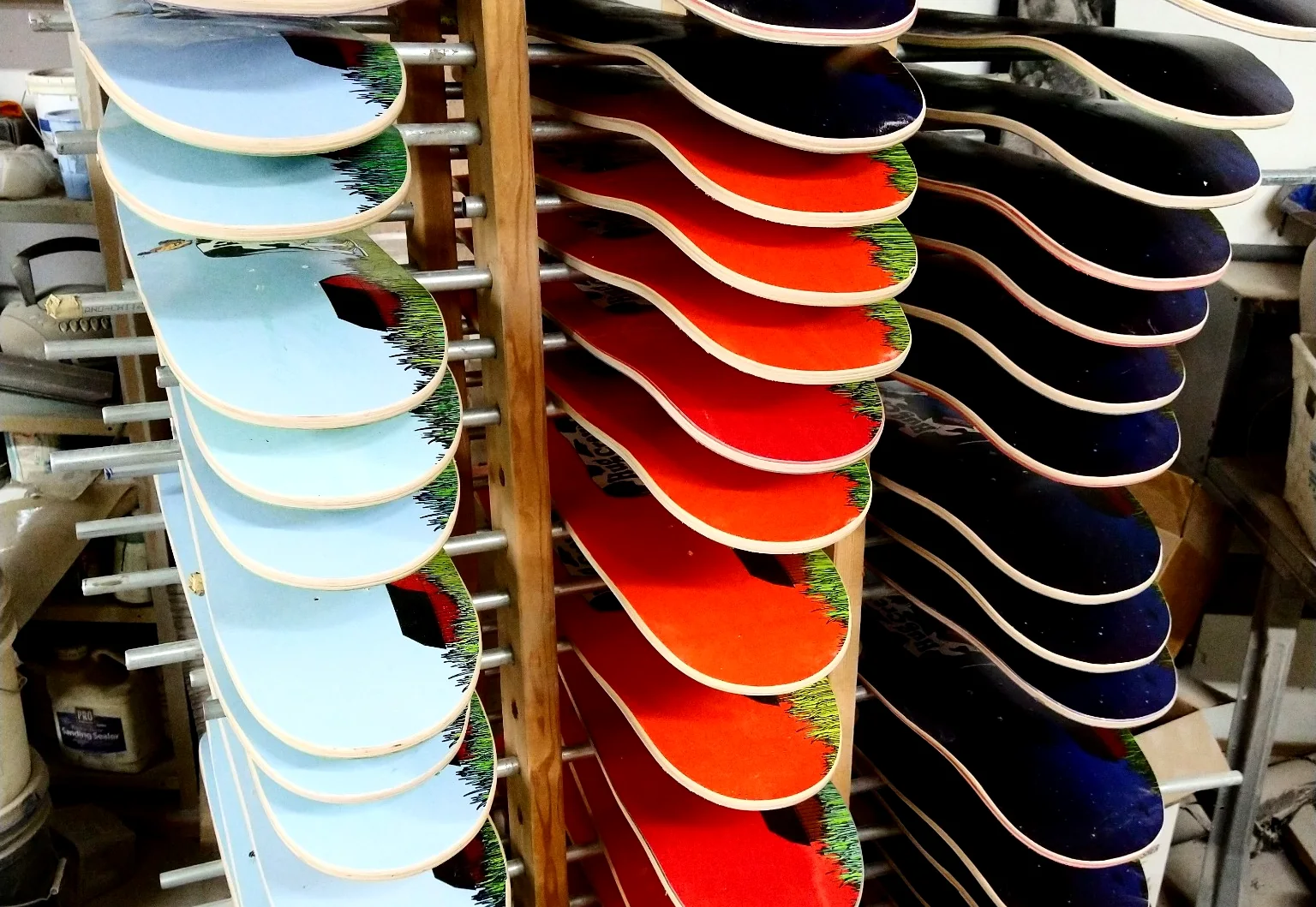
Match the artwork and order size to a printing process that preserves the intended colors, transparent areas, wood grain, and production repeatability.
The best method depends on image coverage, number of colors, transparency, finish, quantity, and whether the transfer is produced by Empire, supplied by the customer, or printed through another approved workflow.
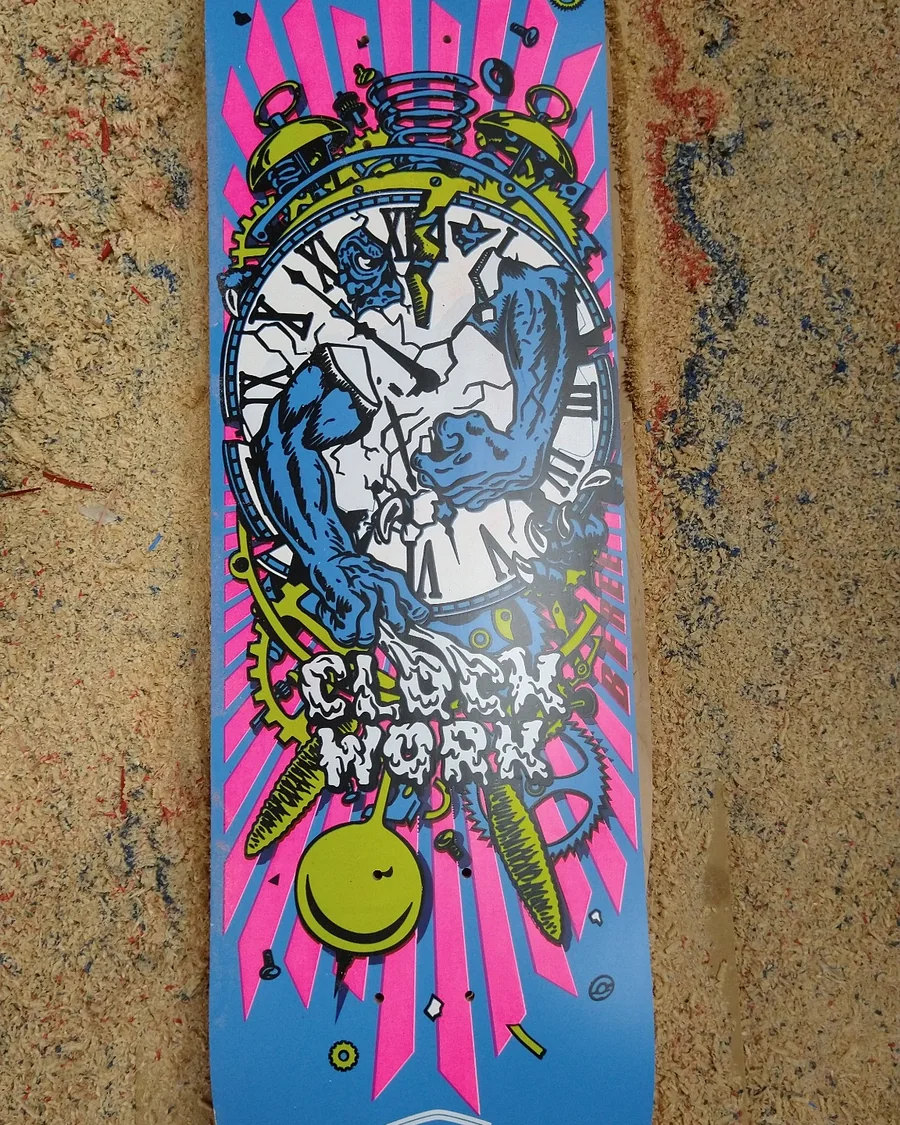
Real customer production makes the capability clear: full-color graphics, repeat runs, dyed veneer combinations, clear finishes, and completed decks moving through the shop.
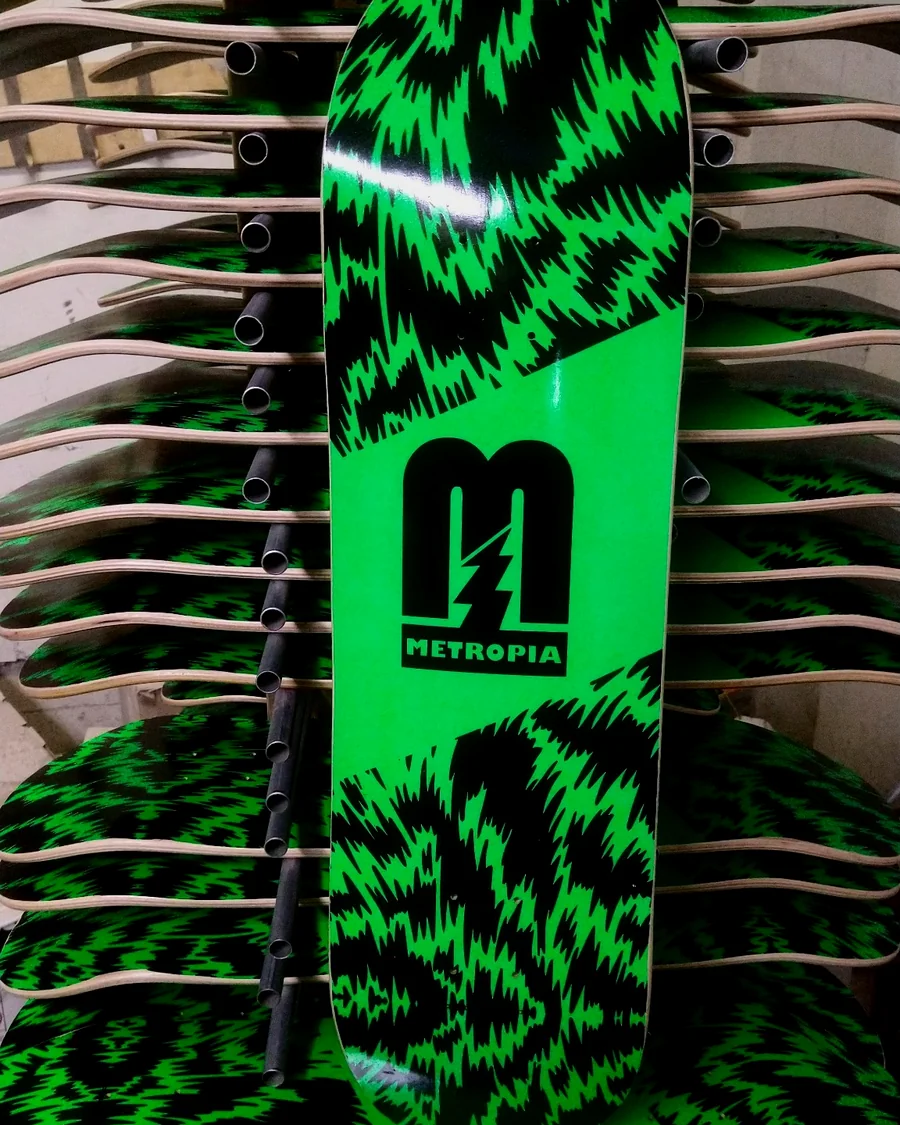
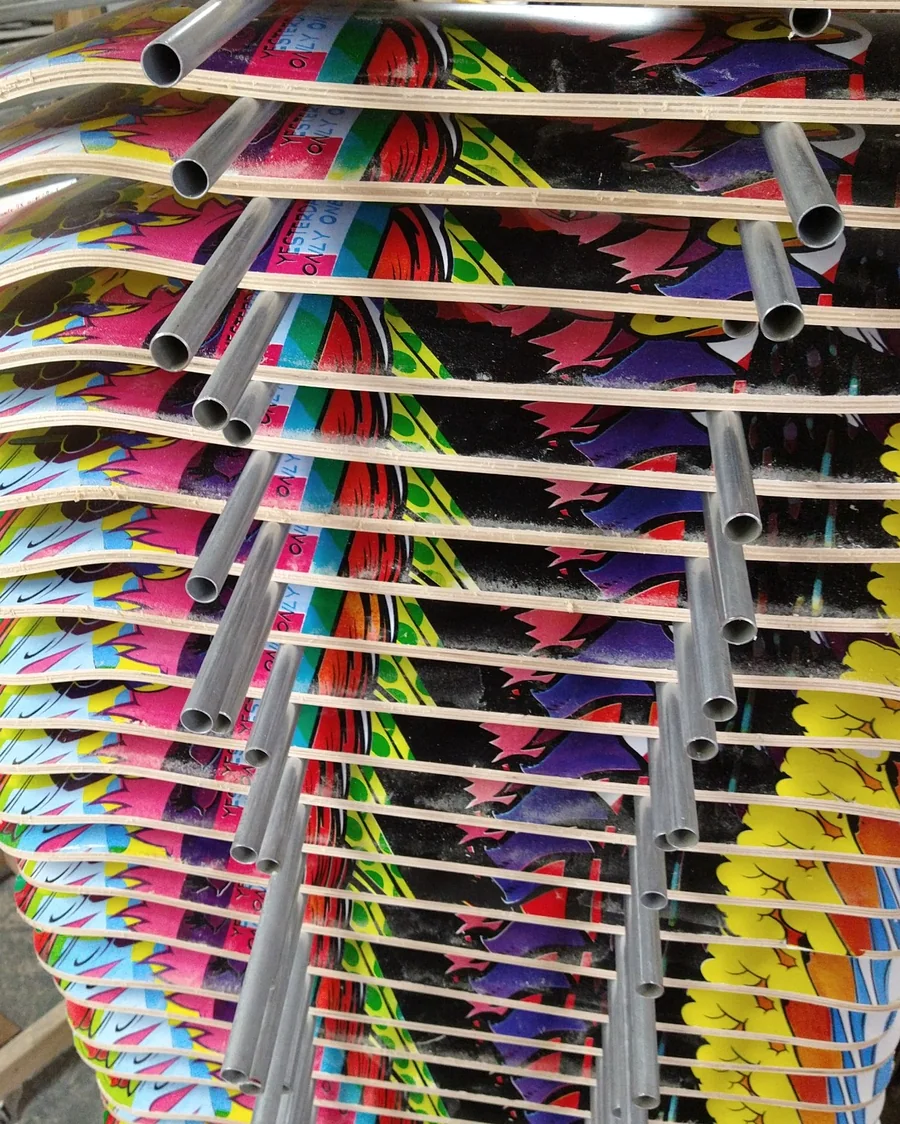
Artwork, deck finish, quantity, and printing method are reviewed together so the production plan matches the intended result.
Keep negative space transparent in the master artwork when the natural maple should show through. White underbase decisions belong in prepress.
Opacity and color appearance depend on the white layer, ink system, veneer color, coating, and the approved physical sample.
Separate artwork, prepress, sample, and production approval so a visual change does not become an unplanned manufacturing change.
High-resolution, true-size production files are preferred. PDF, AI, PSD, TIFF, or another format may be accepted depending on the printing method and how the file is built.
Yes, when the artwork, underbase, transfer, and coating are configured for that result. The physical sample should confirm the appearance.
Potentially. A sample and compatibility review are important because release films, adhesive systems, coatings, temperature, and pressure can behave differently.
A physical sample is strongly recommended when color, transparency, placement, or a new transfer system is important to the order.
Send the artwork, deck quantity, surface/finish requirements, target date, and shipping destination so we can recommend the right printing workflow.
Open the Quote Form →